
- 作者:乙安密海
- 来源:蓝精灵
- 发布时间:2026-08-26
太阳耀斑
Teams increase 138% as World Humanoid Robot Games expands scale and influence_我的网站

一 |
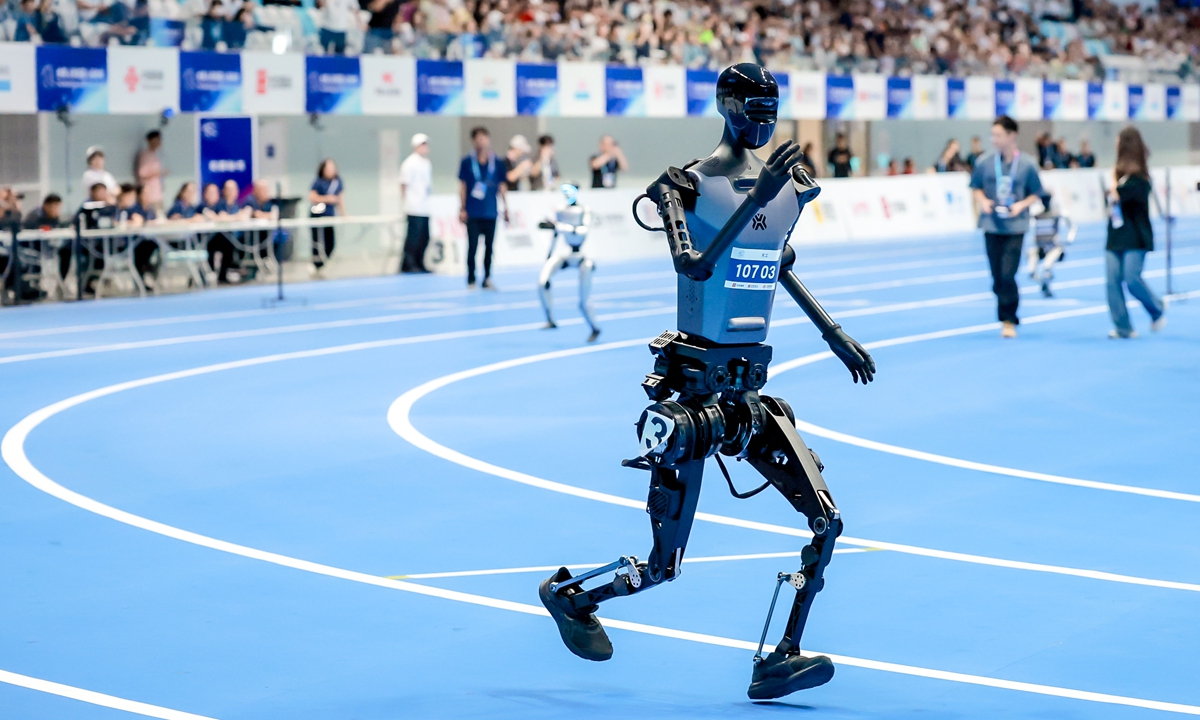
The Games, to last until August 26, are drawing 666 teams and 2,056 robots from 16 countries and regions across six continents, underscoring the event's growing scale and influence in the global humanoid robotics sector, according to Chinese industry experts on Sunday.
A key feature this year is the newly established "Robot Home," an on-site support center designed to function much like an athletes' village for human competitors.
The facility can house more than 1,500 robots and charge at least 1,200 batteries, while enabling digital check-in and retrieval for a single robot in just 30 seconds, according to reports by China Central Television (CCTV) Finance on Sunday.
This marks a clear shift from a simple technology showcase to a more mature, competition-grade event, one analyst said. With robots now being managed through systems similar to industrial asset management - covering storage, dispatch, maintenance and safety monitoring - the Games are increasingly seen as a practical testbed for the commercialization of humanoid robotics.
According to CCTV Finance, the Robot Home will act as the football training and competition base for robots.
For team events like football, the organizing committee often provides the robot bodies, and just a few steps away is the energy recharging station.
At the station, the batteries offered by the organizing committee are charged in advance in the power cabinets, with each compartment equipped with a corresponding power strip.
The Games will also feature a "Robot Street," with activities such as intelligent retail, virtual reality viewing, and robot-operated cafes, providing a richer technology experience for both participating guests and spectators.
It will also provide an interference-resistant and highly reliable competition environment, achieving 5G+Wi-Fi converged communications.
According to the CCTV report, the event organizer has also developed the world's only competition command system specifically designed for robot events, along with an embodied intelligent robot management platform that enables the management of robots across different brands and models.
An analyst said the focus of this year's Games is shifting from whether robots can finish a course to whether they can actually perform tasks.
"Last year it was about whether they could run to the finish line. This year it's about whether they can get the job done," Wang Peng, an associate research fellow at the Beijing Academy of Social Sciences, told the Global Times.
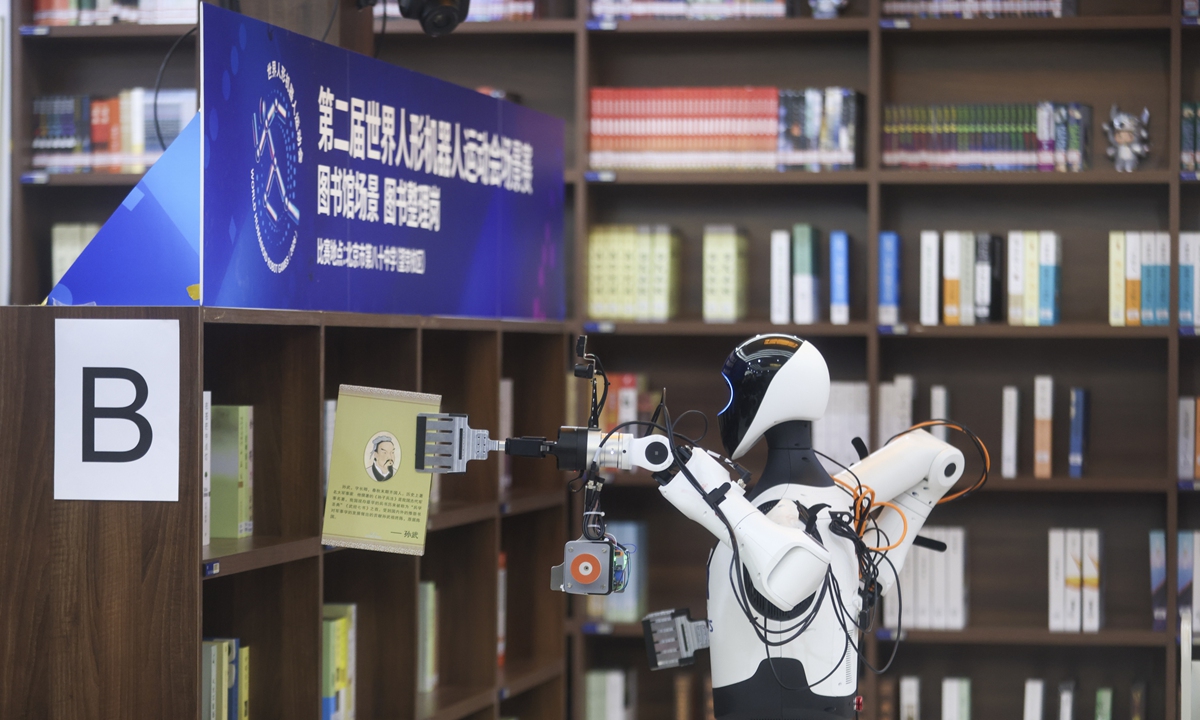
Centered on real-world applications, the scenario competition, one of this year's highlights, is designed around practical needs, with long-process tasks built on complete business logic to test humanoid robots' coordination and operational capabilities in real, complex environments, according to the organizers.
At a real firehouse in Beijing on Sunday, humanoid robots took part in a simulated firefighting mission, testing their ability to detect hazards, operate equipment and respond to emergency scenarios.
Meanwhile, several participating teams were seen in the final sprint of preparation, gearing up for competitions across diverse scenarios such as home services, industrial manufacturing, and emergency rescue.
At the industrial ecosystem training and evaluation base inside the National Speed Skating Oval, robots entered intensive preparation for office-scenario events.
In one challenge, robots must autonomously complete tasks such as loading printers, arranging meeting supplies and operating a paper shredder within 20 minutes. Any mistake or delay can affect the final score, staff at the venue explained.
Compared with the inaugural edition, the number of participating teams has increased by 138 percent, underscoring the rapid expansion of humanoid robotics as the technology moves from showcase demonstrations toward practical application.
This year's Games will run for five days and feature 51 events in total, including 30 competitive events such as ball games and confrontation contests, as well as 21 scenario-based events covering industrial assembly, home services and emergency rescue.
The planned 51 events span competitive, scenario-based and dexterous hand categories, which will reflect gains in motion control, perception-based decision-making and fine control, Chen Jing, a vice president of the Technology and Strategy Research Institute, told the Global Times on Sunday.
The competition has been significantly expanded in both scale and realism.
Scenario-based contests will take place in environments modeled on factories, hotels, homes and logistics facilities, with tasks including assembly, housekeeping, rescue operations and book sorting designed to test robots' ability to perform useful work in demanding conditions, according to reports from the Xinhua News Agency.
For the first time, the Games will establish a dedicated dexterous hand competition, which includes eight high-precision events, all drawn from real industrial production and everyday life scenarios.
A representative from AGILINK, the officially certified dexterous-hand equipment provider, told the Global Times on Sunday that winning the dexterous hand competition certifies a product's capability and means it has cleared the "demonstration-grade" threshold for real-world use.
The event is better understood as an incubator of industry consensus, Chen said, adding that competition first identifies the testing methods that Chinese and foreign firms both accept, which can then evolve toward international standards.
With robots now being managed through systems resembling industrial asset management, including storage, dispatch, maintenance and safety monitoring, the Games are increasingly seen not merely as a technology exhibition, but as a practical testing platform for the commercialization of humanoid robotics, according to Wang.
As the competition opens, the key question may be less about who wins medals and more about which robots, and which companies behind them, will be able to turn those medals into marketable orders, Wang noted.
。 “大家好,今天我演讲的主题是——复兴号为什么跑得这么快?”日前,杭州交投集团“在西站”党群服务中心内,一场精彩的直播比赛火热进行。

二 | 镜头前,一名戴眼镜的男孩深吸一口气,对着摄像头开启了他的讲解。屏幕那头,数千名网友同步在线围观,评论区里“加油”“讲得真好”的留言接连弹出。这是“西站小红心·童声说高铁”红领巾讲解员培养计划的海选现场,70名从全市线上初筛中脱颖而出的选手,按抽签顺序依次登台,完成30秒自我介绍与2分钟主题讲解。赛事同步线上直播,当日直播观看量突破2万人次。

三 | 来自杭州的五年级男孩田浩宇是第一次面对直播镜头。刚登场时他略显紧张、手心冒汗,但一说起中国高铁,他整个人瞬间亮了起来:“从爷爷辈的绿皮火车,到如今飞驰的复兴号,中国速度让我特别震撼。而在杭州西站,我看到的不只是速度,这座‘云之城’把车站和城市融在了一起,让我感受到:中国创新就在我们身边。”说着,他挺直了腰板。有人描绘深夜里列车检修的忙碌身影,有人讲述革命先辈的英勇事迹……现场评委不由感慨:“选题五花八门,却有一个共同点,孩子们都用心思考了、真切感悟了,并带着真情实感讲出来。”杭州西站红领巾讲解员培养计划,既是“以讲促学”的教育实践,也是杭州打造“重要窗口”进程中,培育新时代城市主人翁的生动缩影。活动相关负责人介绍:“我们充分依托西站‘高铁时空馆’爱国主义教育的阵地优势,引导少先队员在‘交通强国’的时代背景下读懂中国式现代化、讲好杭州故事。期待通过这项培育计划,让一抹抹鲜艳的‘小红心’,为杭州建设独特韵味别样精彩的世界名城积蓄蓬勃的少年力量。

四 | ”海选结束后,评委组围绕语言表达、内容质量、仪态仪表、情感感染力四项指标综合评分,公布了22名入围者名单。接下来,他们在接受五日专项集训后,将正式持证上岗,成为杭州西站首批“红领巾讲解员”,在周末为往来旅客提供公益讲解服务。

五 |
Current article:http://rtpgn.rangzhuanhoujuedu.cyou/b2nr8g/20260826/4189.html
Published on:22:31:59
- 本文标签:
- 名侦探柯南